Back to Cleverworkarounds mainpage
 

SQL Server oddities

So its Saturday night and where I should be out having fun, I am instead sitting in a training room in Wellington New Zealand, configuring a lab for a course I am running on Monday.

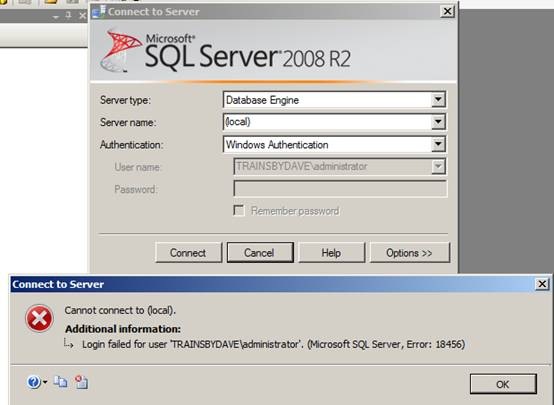
Each student lab setup is two virtual machines. The first being a fairly stock standard AD domain controller and the second being a SQL/SharePoint 2010 box. Someone else set up the machines, and I came in to make some changes for the labs next week. But as soon as I fired up the first student VM’s I hit a snag. I loaded SQL Server Management Studio, only to find that I was unable to connect to it as the domain administrator, despite being fairly certain that the account had been granted the sysadmin role in SQL.

clip_image002

Checking the event logs, showed an error that I had not seen before. “Token-based server access validation failed with an infrastructure error”. hmmm

Log Name: Application

Source: MSSQLSERVER

Date: 31/07/2010 6:45:37 p.m.

Event ID: 18456

Task Category: Logon

Level: Information

Keywords: Classic,Audit Failure

User: TRAINSBYDAVE\administrator

Computer: SP01.trainsbydave.com

Description:

Login failed for user ‘TRAINSBYDAVE\administrator’. Reason: Token-based server access validation failed with an infrastructure error. Check for previous errors.

[CLIENT: <local machine>]

Event Xml:

<Event xmlns="http://schemas.microsoft.com/win/2004/08/events/event">

<System>

<Provider Name="MSSQLSERVER" />

<EventID Qualifiers="49152">18456</EventID>

<Level>0</Level>

<Task>4</Task>

<Keywords>0x90000000000000</Keywords>

<TimeCreated SystemTime="2010-07-31T06:45:37.000000000Z" />

<EventRecordID>8281</EventRecordID>

<Channel>Application</Channel>

<Computer>SP01.trainsbydave.com</Computer>

<Security UserID="S-1-5-21-3713613819-1395520312-4192346095-500" />

</System>

<EventData>

<Data>TRAINSBYDAVE\administrator</Data>

<Data> Reason: Token-based server access validation failed with an infrastructure error. Check for previous errors.</Data>

<Data> [CLIENT: &lt;local machine&gt;]</Data>

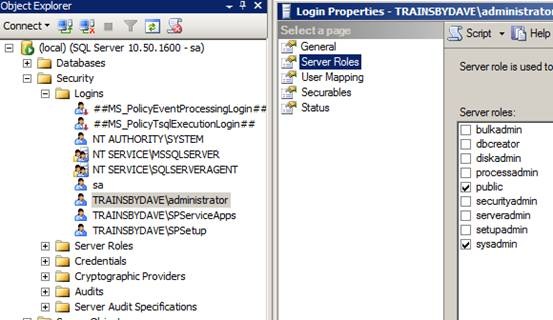
As it happened, whoever set it up had SQL Server in mixed mode authentication, so I was able to sign in as the sa account and have a poke around. All things considered, it should have worked. The user account in question was definitely in the logins and set with sysadmin server rights as shown below.

clip_image004

Uncle google showed a few people with the error but not as many as I expected to see since half the world gets nailed on authentication issues. I also took the event log suggestion and looked for a previous error. A big nope on that suggestion. In fact in all respects, everything looked sweet. The machine was valid on the domain and I was able to perform any other administrative task.

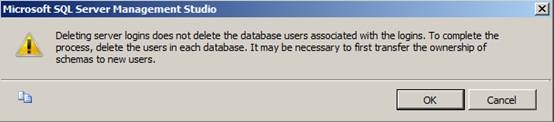
Finally, I removed the TRAINSBYDAVE\administrator account from the list of Logins in SQL Server. It gave the unsurprising whinge about orphaned database users, but luckily for AD accounts when you re-add the same account back it is smart enough to re-establish the link.

clip_image006

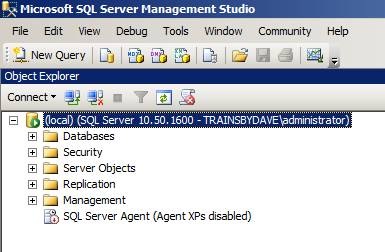
As soon as I re-added the account, all was good again. If I was actually interested enough I’d delve into why this happened, but not tonight – I have another 6 student machines to configure 🙂

Goodnight!

clip_image008


Why I’ve been quiet…

As you may have noticed, this blog has been a bit of a dead zone lately. There are several very good reasons for this – one being that a lot of my creative energy has been going into co-writing a book – and I thought it was time to come clean on it.

So first up, just because I get asked this all the time, the book is definitely *not* “A humble tribute to the leave form – The Book”! In fact, it’s not about SharePoint per se, but rather the deeper dark arts of team collaboration in the face of really complex or novel problems.

It was late 2006 when my own career journey took an interesting trajectory, as I started getting into sensemaking and acquiring the skills necessary to help groups deal with really complex, wicked problems. My original intent was to reduce the chances of SharePoint project failure but in learning these skills, now find myself performing facilitation, goal alignment and sensemaking in areas miles away from IT. In the process I have been involved with projects of considerable complexity and uniqueness that make IT look pretty easy by comparison. The other fringe benefit is being able to sit in a room and listen to the wisdom of some top experts in their chosen disciplines as they work together.

Through this work and the professional and personal learning that came with it, I now have some really good case studies that use unique (and I mean, unique) approaches to tackling complex problems. I have a keen desire to showcase these and explain why our approaches worked.

My leanings towards sensemaking and strategic issues would be apparent to regular readers of CleverWorkarounds. It is therefore no secret that this blog is not really much of a technical SharePoint blog these days. The articles on branding, ROI, and capacity planning were written in 2007, just before the mega explosion of interest in SharePoint. This time around, there are legions of excellent bloggers who are doing a tremendous job on giving readers a leg-up onto this new beast known as SharePoint 2010.

BBP (3)

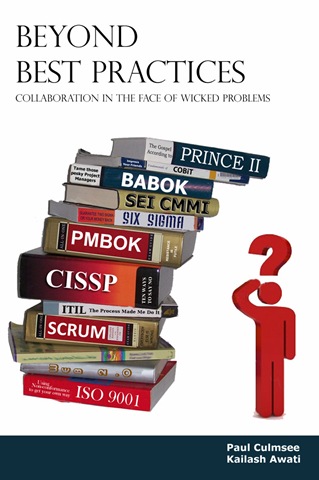
So back to the book. Our tentative title is “Beyond Best Practices” and it’s an ambitious project, co-authored with Kailash Awati – the man behind the brilliant eight to late blog. I had been a fan of Kailash’s work for a long time now, and was always impressed at the depth of research and effort that he put into his writing. Kailash is a scarily smart guy with two PHD’s under his belt and to this day, I do not think I have ever mentioned a paper or author to him that he hasn’t read already. In fact, usually he has read it, checked out the citations and tells me to go and read three more books!

Kailash writes with the sort of rigour that I aspire to and will never achieve, thus when the opportunity of working with him on a book came up, I knew that I absolutely had to do it and that it would be a significant undertaking indeed.

To the left is a mock-up picture to try and convey where we are going with this book. See the guy on the right? Is he scratching his head in confusion, saluting or both? (note, this is our mockup and the real thing may look nothing like this)

This book dives into the seedy underbelly of organisational problem solving, and does so in a way that no other book has thus far attempted. We examine why the very notion of “best practices” often makes no sense and have such a high propensity to go wrong. We challenge some mainstream ideas by shining light on some obscure, but highly topical and interesting research that some may consider radical or heretical. To counter the somewhat dry nature of some of this research (the topics are really interesting but the style in which academics write can put insomniacs to sleep), we give it a bit of the cleverworkarounds style treatment and are writing in a conversational style that loses none of the rigour, but won’t have you nodding off on page 2. If you liked my posts where I use odd metaphors like boy bands to explain SharePoint site collections, the Simpsons to explain InfoPath or death metal to explain records versus collaborative document management, then you should enjoy our journey through the world of cognitive science, memetics, scientific management and Willy Wonka (yup – Willy Wonka!).

Rather than just bleat about what the problems with best-practices are, we will also tell you what you can do to address these issues. We back up this advice by presenting a series of practical case studies, each of which illustrates the techniques used to address the inadequacies of best practices in dealing with wicked problems. In the end, we hope to arm our readers with a bunch of tools and approaches that actually work when dealing with complex issues. Some of these case studies are world unique and I am very proud of them.

Now at this point in the writing, this is not just an idea with an outline and a catchy title. We have been at this for about six months, and the results thus far (some 60-70,000 words) have been very, very exciting. Initially, we really had no idea whether the combination of our writing styles would work – whether we could take the degree of depth and skill of Kailash with my low-brow humour and my quest for cheap laughs (I am just as likely to use a fart joke if it helps me get a key point across)…

… But signs so far are good so stay tuned 🙂

Thanks for reading


Paul Culmsee

www.sevensigma.com.au


SharePoint Webcasts: Reporting Services for the Really Really Good Looking

imageLast year, Peter Serzo and I presented at the SharePoint Best Practices Conference in DC. We did an extremely serious talk called “SharePoint and SQL Reporting Services 2008 for the really really good looking” which rated rather well. As part of this, we recorded a bunch of screencasts that have never seen the light of day, so I thought that some would benefit from this being released to a wider audience.

Note: This post and content is really going make utterly no sense unless you have watched Zoolander. Even if you have seen the movie, before you launch into the webcasts, some scene setting is required.

The business need

Some time ago, Peter and I were contracted by the Derek Zoolander School for the Really, Really Good Looking after Derek saw Microsoft’s new SharePoint diagram when he accidentally picked up a “Computerworld” magazine. Apart from matching Derek’s suit colour rather nicely, the diagram captivated his imagination with the notion of “Insights”.

Zoolander thought that “Insight”, sounded like the perfect look to follow up from the highly successful “Magnum”, which he used to save the Malaysian prime ministers life. He took the diagram to his wife, and demanded that he must have “Insights” at all costs.

image

Zoolander’s wife saw the business problem that “Insights” would help to address. You see, the Derek Zoolander School for the Really, Really Good Looking, at great expense, custom developed an ERP system to manage everything you needed to know about male models. The system was called the “Computerised Records for Attractive People”…

image

The CRAP system stored all sorts of interesting information about male models, such as tracking their “hotness”, as well as important detail such as stated age versus actual age, and any cosmetic procedures that they have undertaken. After a long and expensive consultation, Peter and I concluded that SharePoint 2007, integrated with SQL Reporting Services, was the perfect solution to create the all important “Insights” that Zoolander so desperately needed.

As a result, we conducted a project kickoff meeting with Hansel and Peter tried to explain the architecture of reporting services using a nice diagram.

image

… but we worked out pretty quickly that this was not the way to explain how it all worked to poor old Hansel…

image

So instead, we went the live demo route. Being male models, custom development was totally out of the question. This solution had to be done using all out of the box methods in a quick and easy manner. Below are the four live demos that were recorded and now you can use them as inspiration for your own male modelling school.

  • Our first webcast illustrates how we were able to create a meaningful report from the CRAP system within five minutes.
  • The second webcast expanded on this idea, by illustrating how reports can be parameterised and linked together for drilldown reporting.
  • The third demo modifies the user profile store to allow for recording of each users unique ID in the CRAP system
  • The last webcast strings this all together for the final demonstration where we pimp the report to make it dynamic with no custom code.


image  image

The 5 minute report

Drilling down with Derek
image image

User Profiles for the really really good looking

Pimp my report


We hope you find some value from these webcasts and we look forward to hearing about your hot new look as a result!

Thanks for reading


Paul Culmsee

www.sevensigma.com.au


A roving we will go…

Hi all

I am finding it increasingly difficult to find the time to post at the moment. Too many projects, too many initiatives and too many evil plans coming to fruition. It’s like every seed I planted last year suddenly sprouted this year and I can barely keep up. Whilst this is a good thing for a growing business, it is not a good thing when it comes to writing blog posts.

In April I’ll be jumping on a very long flight to London, to attend and speak at the SharePoint Evolutions conference, held at the Queen Elizabeth II Conference Centre.

SP2010EvoBanner_Large (2)

This conference represents the evolution of the Best Practice conferences held over the last three years or so. It is one of the most unique and important SharePoint conferences of the year. SharePoint 2010 will be a key focus, yet unlike say a Tech-Ed, many of the topics have a heavy focus on the strategic side of the SharePoint challenge, in areas like Information Architecture, User Engagement and Planning and Deployment. There are five tracks in all, and over seventy speakers from all over the world.

  • For the techie geeks who like to hang in datacenters and like to get paged late at night to fix things that have died, the IT Pro track (ITP) will push their buttons. ITP sessions will focus on topics such as Document Management, Database Sizing, SharePoint and SQL optimization or server farm deployments scenarios.
  • For the developers and designers of the world, the DEV track is for you. DEV sessions will focus on topics in the areas of customization, development, and deployment best practices.
  • For all of the cool people, we have the information worker track where I speak (IW). In fact the IW track is so damn cool that there are two IW tracks! Sessions here will focus around business strategy and adoption, information architecture, training your organization or developing a culture of collaboration.
  • For the tech geeks who can code, who are therefore more elite than regular tech geeks and devs (looking at you Spence), there is a deep dive track to make you happy called level 400. In this track there will be IT Pro and Developer sessions that will be deep diving into the product and code. There will be very few slides, lots of source code and demonstrations.
  • Finally, there is a community track. This track has sessions for all verticals and will include speakers from all types of companies who have implemented SharePoint and what they learnt by doing so. All speakers are actively engaged in the SharePoint community and user group and have a wealth of knowledge to share.

This conference is organised by Steve Smith of Combined Knowledge, who is renowned for putting together something special for all participants. The speaker list is pretty much a who’s-who of the SharePoint world, and I am very much looking forward to catching up with (Paul takes deep breath) Andrew Woodward, Ben Curry, Brett Lonsdale, Chandima Kulathilake, Dux Sy, Joel Oleson, Laura Rogers, Michel Noel, Mike Watson and Zlatan Dzinic to name a few.

Bob Fox will also be there, so we finally have that beer that apparently I am supposed to buy – according to Bob anyway :-).

So if you are going to attend a SharePoint conference this year, then my strong suggestion is to make it this one.


Thanks for reading

Paul Culmsee

www.sevensigma.com.au


SharePoint Saturday Perth Wrap and SP2010 BOOTCAMPS!

Well, the event that I never thought would ever happen in Perth happened, and not only did it happen, it had more interest than expected and some people unfortunately missed out. Jeremy, as a result, had to take many upset phone calls. It seems that for Perth, once a few people got wind of SharePoint Saturday, everyone wanted in.

There were great sessions, great giveaways and I think overall, tremendous value for this free event. Seven Sigma sponsored the showbags, which we managed to fill with some awesome goodies, thanks to the generosity of Brett Lonsdale at Lightningtools, Michael Sampson, Bjoern Furuknap, Dux Sy, Combined Knowledge and the good folks at Colligo. If you attended the event, please show your support to these guys – they really went above and beyond. Mrs Cleverworkarounds, on the other hand, never wants to see or hear the word “showbag” ever again! 

For me personally, I enjoyed meeting Michael Noel. I think he and I were the only non devs at SharePint (okay well maybe Joshua Haebets too 🙂 ). Speaking of which, Joshua and Milan Goss were also great to meet too, and I’m sure that there might be projects in the future we will see each other on.

Seven Sigma also donated a seat on the first SharePoint 2010 week-long bootcamp to be held in Perth. As a background: I met Steve Smith in New Zealand last year and we got on very well. Recently, we asked him if he would consider Perth to run his 2010 bootcamps and he has agreed! This is a great outcome for Perth, having beat out Sydney and Melbourne for being the first to run them as this will be the first time the courses have been offered to the general public in Australia.

Steve Smith and Gary Yeoman will be flying in from the UK especially for this event, so it is not to be missed. Both Steve and Gary are internationally renowned for the quality of their training and the courseware itself is the very same material that Microsoft itself uses to train their own staff on SharePoint 2010. All you eastern states people reading this?  It’s about time you went west anyway, so come and check out Perth’s beer while you are here!

SharePoint 2010 Beta Developer Track     4 days

  • Delivered by Gary Yeoman
  • Date:  27th April  -  30th April 2010
  • Cost: $3000 (+GST)

This course guides you through essential 2010 elements, from pre-requisites to system integration, giving you the skills to work confidently and leverage full value from new technology.

Please note: Due to our ANZAC public holiday this course is a 4 day course from 08:30 – 6:00pm. One additional session is added per day to make up for the Monday public holiday.

SharePoint 2010 Beta Administrator Track    5 days

  • Delivered by Steve Smith – MVP
  • Date: 10th May – 14th May 2010
  • Cost: $3000 (+GST)

Step-by -step understanding is the key to successful implementation and deployment of SharePoint 2010. This 15-module course will guide you through each critical stage, giving you exactly the skills you need to leverage full value from the latest SharePoint technology.

Book now at Seven Sigma’s website:

http://www.sevensigma.com.au/2010/02/07/first-ever-sharepoint-2010-training-courses-2/

For more info visit: www.combined-knowledge.com.au

or contact: training@sevensigma.com.au


SharePoint Saturday Perth is upon us

Well I have to confess that I never thought it would happen in sleepy Perth, but thanks to the monumental efforts of Jeremy Thake, we are about to have our own little slice of SharePoint Saturday on Feb 6th! Jeremy has managed to secure a great selection of national speakers and even secured an international speaker making the 35 hour trip to our sunny shores! Ha Ha Michael Noel, welcome to Jeremy and my world!

For those of you in Perth or surrounds who are not aware, SharePoint Saturday is a bit of a global phenomenon these days, with these FREE events being held all over the world. In fact, such is the quality of speakers and topics that it will deliver much more value then a paid conference in Perth. The selection of speakers is of such quality Jeremy himself had to forgo a slot and I’m also there as a participant, rather than as a speaker too (although two of my Seven Sigma colleagues are presenting).

There are 3 tracks: Information Worker, IT Pro and Developer with six one hour sessions throughout the day.

National and international speakers include:

Michael Noel, of ‘SharePoint 2007 Unleashed’ author fame, is flying in from the US to present to IT Pro’s on Virtualisation in SharePoint
William Cornwill from Microsoft is flying in from Melbourne to present on Information Worker (End User) info for SharePoint 2010
Milan Gross from Synergy is flying in from Sydney to present to IT Pro’s on Disaster Recovery
Joshua Haebets from Evolve Information Services is flying in from Brisbane to present to Information Workers on working offline with SharePoint Workspace 2010
Neil Haddley from Mad Blue Duck, is flying in from Adelaide to present to Information Workers on Document Imaging
Garth Luke from AvePoint, is flying in from Sydney to present on SharePoint Architecture Best Practices

Local speakers include:

Adam Bell from ZettaServe will be presenting to IT Pros on PowerShell
Ian Loughton from Alcoa will be presenting to Information Workers on using Views instead of Meeting Workspaces in SharePoint 2007
Peter Chow from Seven Sigma will be presenting to Information Workers on integrating SharePoint with Real-Time data case study in SharePoint 2007
Phil Duffy from Clayko Group will be presenting to Information Workers on Document Imaging
Michael Hanes from Diversus will be presenting on Best Practices with developing against SharePoint Lists
Sezai Komur from Ignia will be presenting to Developers on Workflows in Visual Studio 2008 for SharePoint 2007
Stephen Roche from Velrada will be presenting to Developers about Business Connectivity Services in SharePoint 2010
Tommy Segoro from L7 will be presenting on the differences for Developers between Visual Studio 2007 and Visual Studio 2010 with SharePoint
Garry Stewart from Aijilon will be presenting to Developers on Access Services in SharePoint 2010
Frik Stuart from CSG will be presenting to IT Pros on FAST Search in SharePoint 2010
Chris Tomich from Seven Sigma will be talking about Accessibility with the ARF Framework in SharePoint 2007
Jonathen Wade from Citrix will be talking to IT Pros on Load Balancing and Web Optimisation within SharePoint

This should be a terrific event and not to be missed! I’ve called in a favour here and there and hopefully will have some additional prizes and giveaways for the event.

Stay tuned…


The problem with sales guys… (a peek into complex adaptive systems)

Vulgarity warning. Its the silly season, I am winding down and being more low-brow than usual with this post

There is this wonderful way to look at the world, through a lens of something called “Complex adaptive systems”. Unfortunately with a name like that, it is automatically doomed to be only spoken of and understood by, a small subset of those sort of dishevelled looking nerdy guys who others take the piss out of when they are not around.

The notion of complex adaptive systems explains many things, including why salesman can unintentionally really be damaging to an organisation. I thought that I needed to write about this, and given that I am going to talk about sales guys, I had to write in a manner commiserate with their level of understanding of how the world works. Since the chances of a sales guy reading my blog is probably low, I should be safe 🙂

So here we go.

Here is a sales guy. Although us geeks think they are assholes, for this metaphor we have to change our context of what an asshole actually is. I think of him more of a guy who gathers food and brings it to you.

image

Here is the world for a sales guy. He finds work, and feeds that work into the mouth of the organisation. For performing such a feat, he gets to nibble off a small morsel of the meal to keep for himself. If he feeds the organisation enough and makes it grow, he will get enough morsels to grow rather nicely himself. This is a pretty sweet deal if you are good at finding food, because your reward is a percentage of what you push into the organisations mouth. Therefore it is in the sales guys interest to find as much food as he can for the organisational “body”. In fact his performance is directly attributed to doing exactly that in the form of quotas or sales targets

image 

At the other end of the chain, the implementers have to digest what has been fed them from mouth and produce output that makes clients happy. Therefore it is the people in the organisation that actually implement a project who are actually the assholes, not the sales guys. As a result, I can say with some confidence that most people reading this post, like myself, are all assholes.

image

As this cycle perpetuates over time, the body in between these two ends grows. To continue to feed this body and keep it growing, we need to seek out more food. To do this we try and incentivise our sales people to supply more food by offering them larger morsels if they make more ambitious targets.

Never forget the assholes

Now we all know that we have to eat a balanced diet with healthy foods. But some people find it a pain to do all of that preparation and effort and instead go and grab some Chinese takeout instead. To a sales guy who is being rewarded for the amount of food being delivered to the organisation, fast food is great! Remember that the sales guy only takes just enough of the food for no lasting effects and is the furthest away from the assholes to feel the negative effects on the organisational as a whole.

Now our sales guy starts to look like the image below.

image

Therefore, this process of incentivising sales guys by the amount of food that they pass into the mouth is not without its risks and often can damage the long term health of the organisational body. Fast food can be tolerated now and again of course. For example, we all get the occasional hankering for Kentucky Fried Chicken every 6 months or so, and delude ourselves that this time, unlike all of the other times, it will actually not be oily enough to power a small town and leave you with that queasy feeling that you get when your heart labours against your cholesterol.

This can be a self perpetuating cycle. For example, the sales guy feeds the organisation a blisteringly hot spicy lamb vindaloo. Naturally is a very unpleasant experience for the assholes and as a result, what is delivered to the customer is (literally) crap and costs much more than anticipated. This cost bleed puts pressure on the sales guys to feed the body to make up for the wasted time, effort and cost. But the sales guy is so far away from the assholes, it does not occur to him that it was the spicy lamb vindaloo was the wrong meal. Nor too, does he receive any feedback to let him know that the burning sensation still lingers.

So what does he do? He feeds an even spicier lamb vindaloo to the mouth. Why? because he now has learned how to find spicy lamb vindaloos and is reaping the rewards of many tasty morsels – a perfectly reasonable practice given that he is now put under pressure to deliver more food.

Despite good intentions…

This cyclical phenomenon is called the “ring of fire” and afflicts many organisations who just can’t seem to deliver projects on time and budget. The customers of these organisations, fed up with getting nothing but crap, start to look elsewhere, thereby increasing pressure and starting the cycle again. Management get all flustered and usually blame the assholes.

The essence of the notion of the complex adaptive system is that the assholes and sales guys need each-other. Attempting to optimise the sales guys performance in isolation, ultimately has a negative impact on the assholes, which in turn has a negative impact on the organization as a whole.  The organisation is a system that comprises of many parts that interact in different ways. The system is perfectly capable of self organising and self optimising. For example, if the sales guy feeds the organisation sushi and next time it is fed a burrito, the assholes have a certain amount of tolerance to deal with that. But when you optimise one end (reward for food) without considering the assholes at the other end, you actually reduce that tolerance to deal with change!

The lesson that should be learned here is that the command and control methods of problem solving or project management that operate by optimising one part of the system, will usually work in the short term, but to the long term detriment to the system as a whole. The result that I have seen first hand for many IT organisations in particular, is that they have developed a certain reputation in the market for being a bit on the nose because of their seeming inability to get a project completed. Once this happens, it is very very difficult for them to regain the lost trust.

Microsoft for example, has taken years to win back the hearts and minds of geeks for their actions more than a decade ago.

What sort of fast food is SharePoint?

image image

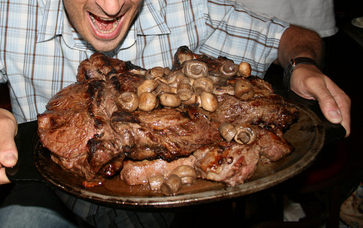
If SharePoint were a fast food, it would either be one of those giant steaks that you get your name on the wall if you finish, or the Guatemalan chilli that sent the normally invincible Homer into the spirit world. It is so seductive to the sales guys because it is in demand, but their distance to the assholes means that they will think it should be just like any other IT infrastructure oriented project to install. Therefore, some integrators will be doomed to repeatedly bite off more than they can chew and by the time they realise it, the long term damage will be done.

So what do you do?

If you accept that the organisation is a system and that optimising one part of it will likely impact the rest of the organisation, often in unpredictable ways, then incentivising has to be more strategically focussed. In other words, the true performance indicator on a good sales guy is actually the success of the project, because it is a much more reliable indicator of the sort of food being passed to the mouth and results in customer goodwill – social capital. If sales guys received their morsels based on the success of the project as a whole, then it would force them to interact more with the assholes to achieve that end and think a little more carefully about what they feed the organisation.

But self interest is a very strong force and there are very few sales guys that would be enthusiastic about that idea. This is of course the other big problem. The longer you leave it, the harder it is for an organisation to make the changes necessary to produce the outcomes that they aspire to.

If you want to see that in practice, look no further than the Copenhagen climate change conference.

Final note about thinking in terms of systems

Of course, if we are taking a complex adaptive systems view, then one could argue that the affect of all of this would be that your sales guys will leave and find organisations who feed them bigger morsels with much less effort of (heaven forbid) being judged on real outcomes. As a result, opportunities for sales may be lost to competitors and the organisation still suffers as a whole

This is the dilemma of systems thinking and what frustrates the hell out of the “command and control” world. You can just end up with a giant talkfest and never actually make a decision on anything because systems adapt in ways that can’t be predicted.

Is it any therefore wonder that command and control usually wins out? 


Thanks for reading


Paul Culmsee


The rationale of a 5 year old

Hahaha ahem – I found this funny. I am teaching my 11 year old daughter how to perform issue and dialogue mapping. Each night, we pick a relevant family topic, discuss all of the issues around the topic and my daughter maps the discourse.

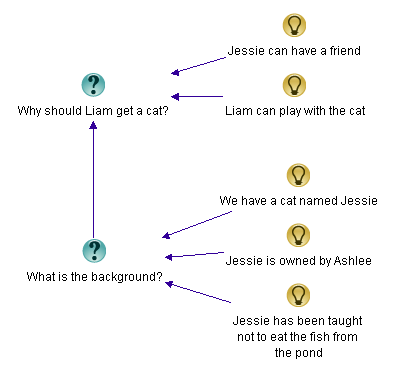
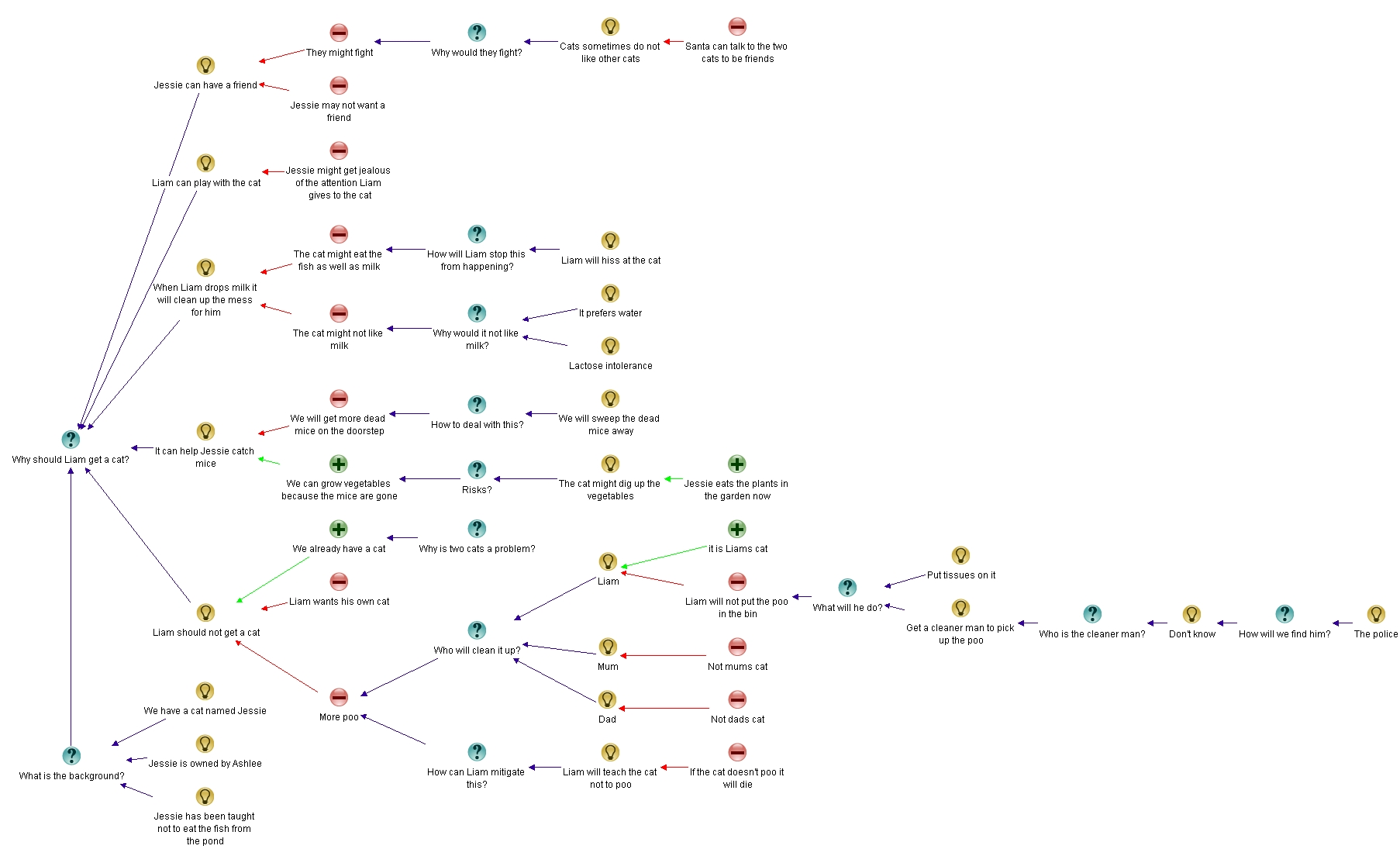
Recently and the root question of the day was whether her little brother (Liam) should get a cat for Christmas. We already have a cat named Jessica and a detailed conversation unfolded, where my 5 year old outlined his reasons to the family. We all had a good laugh and by the end if the session, my 5 year old changed his mind and decided that he’d rather ask Santa for some lego. 

Check out how it unfolded.

Start: Root question, some basic background and Liam’s first two answers

image

Round 2. Mum and dad challenge both of the initial ideas and Liam offers a potential counterpoint. Unfortunately, Liam has the perfect comeback that his mother and I cannot argue with – Santa will take care of it!

image

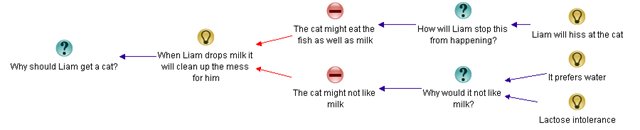
Round 3. Liam offers a new reason why he should get a cat. It will help him with spilt milk. When challenged on the grounds of the new cat eating fish as well as milk, and the possibility of the cat not liking milk, Liam offered to hiss at it to protect the fish.

image

Round 4. Unable to get buy-in for the milk idea, Liam switches tack and comes up with quite a clever idea that has some merit. Our current cat has a particular talent for catching mice and then leaving what is left of them at the back door for our approval. Liam suggests that we can grow vegetables in the garden because of the fact that two cats are now hunting mice, thereby reducing the population (not bad logic for a 5 year old). Unfortunately for Liam, he is reminded that our current cat also has a habit of chewing plants in the herb garden now.

image 

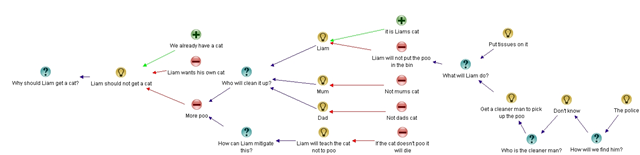
Round 5. My personal favourite. Mrs Cleverworkarounds suggests that Liam should not get a cat because there will be more cat poop to clean. When asked who will clean up said poo, Liam was adamant that it would not be him. When pressed for suggestions, he firstly says he will cover the mess with Kleenex and as alternative suggests that we can get a “cleaner man” to pick up the poo. When Liam was further challenged as to who the cleaner man is and how to find him, he suggested the police would help. He also then hit upon the idea of teaching the cat not to poo as well! 🙂

image

This proves that mapping discourse does work. At this point, faced with the prospect that he would have to clean up after the cat, Liam conceded defeat and asked for Star Wars lego instead.

The full map in context can be found below (click for the full size version).

image


Thanks for reading

Paul Culmsee

www.sevensigma.com.au


SharePoint, Debategraph and Copenhagen 2009 – Collaboration on a global scale

Note: For those of you who do not wish to read my usual verbose writing, then skip to the last section where there is a free web part to download and try out.

Unless you are a complete SharePoint nerd and world events don’t interest you while you spend your hours in a darkened room playing with the SP2010 beta, you would no doubt be aware that one of the most significant collaborative events in the world is currently taking place.

The United Nations climate change conference in Copenhagen this month is one of the most important world gatherings of our time. You might wonder why, as a SharePoint centric blog, I am writing about this. The simple answer is that this conference in which the world will come together to negotiate and agree on one of the toughest wicked problems of our time. How to tackle international climate change in a coordinated global way. As I write this, things do not seem to be going so well :-(.

image

Climate change cuts to the heart of the wellbeing expected by every one of us. Whether you live in an affluent country or a developing nation, the stakes are high and the issues at hand are incredibly complex and tightly intertwined. It might all seem far away and out of sight/out of mind, but it is clear that we will all be affected by the outcomes for better and worse. The spectre of the diminishing window of opportunity to deal with this issue means that an unprecedented scale of international cooperation will be required to produce an outcome that can satisfy all stakeholders in an environmentally, economically and social bottom line.

Can it be done? For readers who are practitioners of SharePoint solutions, you should have an appreciation of the difficulty that a supposedly “collaborative tool” actually is to improve collaboration. Therefore, I want you to imagine your most difficult, dysfunctional project that you have ever encountered and just try and now multiply it by a million, gazzilion times. If there are ever lessons to be learned about effective collaboration among a large, diverse group on a hugely difficult issue, then surely it is this issue and this event.

Our contribution

My colleagues and I became interested in sense-making and collaboration on wicked problems some time back, and through the craft of Dialogue Mapping, we have had the opportunity to help diverse groups successfully work through some very challenging local issues. I need to make it clear that much of what we do in this area is far beyond SharePoint in terms of project difficulty, and in fact we often deal with non IT projects and problems that have significant social complexity.

Working with people like city planners, organisational psychologists, environmental scientists and community leaders to name a few, has rubbed off on myself and my colleagues. Through the sense-making process that we practice with these groups, we have started to see a glimpse of the world through their eyes. For me in particular, it has challenged my values, social conscience and changed the entire trajectory of where I thought my career would go. I feel that the experience has made me a much better practitioner of collaborative tools like SharePoint and I am a textbook case of the the notion that the key to improving in your own discipline, is to learn from people outside of it.

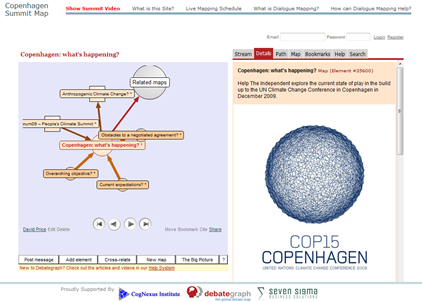
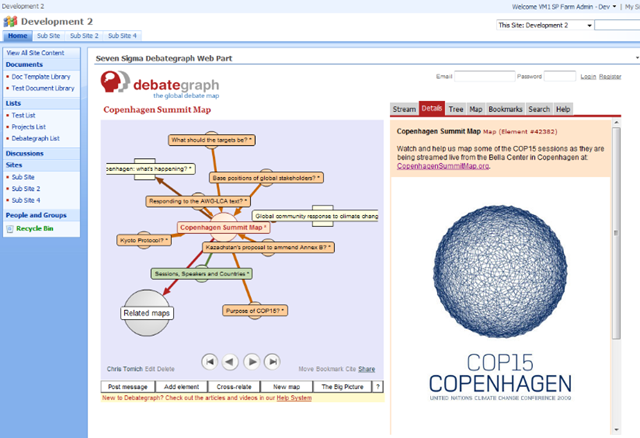
We have now become part of a global sense-making community, much like the global SharePoint community in a way. A group of diverse people that come together via common interest. To that end, my colleague at Seven Sigma, Chris Tomich has embarked on a wonderful initiative that I hope you may find of interest. He has enlisted the help of several world renowned sense-makers, such as Jeff Conklin of Cognexus and David Price of Debategraph, and created a site, http://www.copenhagensummitmap.org/, where we will attempt to create a global issue map of the various sessions and talks at the Copenhagen summit. The aim of this exercise is to try and help interested people cut through the fog of issues and understand the points of view of the participants. We are utilising IBIS, the grammar behind dialogue mapping, and the DebateGraph tool for the shared display.

image

How you can help

If you feel that issue mapping is for you, then I encourage you to sign up to Debategraph and help contribute to the Copenhagen debate by mapping the dialogue of the online sessions (which you can view from the site).

Otherwise, Chris has written a simple, free web part, specifically for Copenhagen which can be downloaded “Mapping tools” section of the Copenhagen site. The idea is that if you or your organisation wish to keep up with the latest information from the conference, then installing this web part onto your site, will allow all of your staff to see the Copenhagen debate unfold live via your SharePoint portal. Given that SharePoint is particularly powerful at surfacing data for business intelligence, think of this web part as a means to display global intelligence (or lack thereof, depending on your political view 🙂 ).

Installing is the usual process for a SharePoint solution file. Add the solution to central admin, deploy it to your web application of choice and then activate the site collection scoped feature called “Seven Sigma Debategraph Components”. The web part will be then available to add to a page layout or web part page.

image

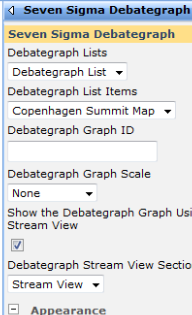
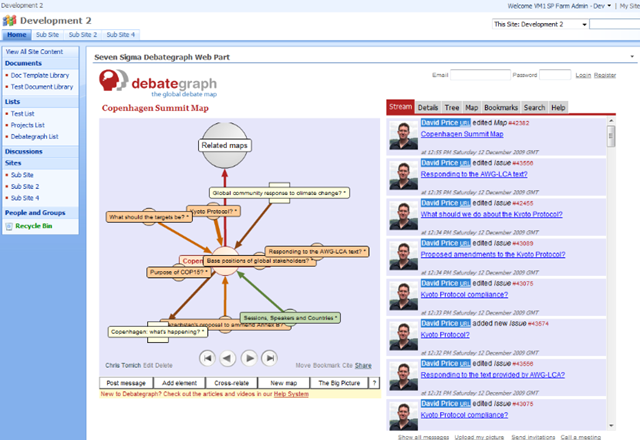
The properties of this web part allow you some fine grained control over how the Debategraph map renders inside SharePoint. The default is to show the Debategraph stream view, which is a twitter style view of the recent updates as shown in the example below.

image

Stream view is not the only view available. Detail view is also very useful for rationale that has supplementary information, as shown in the example below.

image

By the way, you can use this web part to display any Debategraph debate – not just Copenhagen. The Debategraph map to display is also controlled via the web part properties.

For information on how to change the default map, then check out this webcast I recorded for the previous version here.

I hope that some of you find this web part of use and look forward to any feedback.


Kind regards


Paul Culmsee

www.sevensigma.com.au


SBS 2008, Hewlett Packard, WSS3, Search Server 2008 Express and a UPS – Oh the pain!

image

In the words of Doctor Smith from lost in space, while everyone else was in Vegas having a grand old time, I was at a client site, having to come to grips with the beast known as Windows Small Business Server 2008. I rarely work with SBS2003 and had never used SBS2008 until now.

This was one of those engagements that is somewhat similar to those awful dreams that you have when you are trying to get to some place, but you never quite get there and your subconscious puts all sorts of strange and surreal obstacles in your path. In my case, the surreal obstacles were very real, yet some of them were really really dumb. Whatsmore, it is a very sad indictment on IT at several levels and a testament to how complexity will never be tamed with yet more complexity.

As a result, I really fear the direction that IT in general is heading.

So where to begin? This project was easy enough in theory. A former colleague called me up because he knew of my dim, dark past in the world of Cisco, Active Directory and SharePoint. He asked me to help put in SBS2008 for him, configuring Exchange/AD/SharePoint and migrating his environment over to it.

“Sure”, I say, “it’ll be a snap” (famous last words)

image

I haven’t use the coffee or tequila ratings for a while, so I thought that this post was apt for dusting them off. If you check the Why do SharePoint Projects Fail series, you will see that I use tequila shots or coffee at times. In this case, I will use the tequila shots to demonstrate my stress levels.

Attempt 1

We start our sorry tale a few weeks ago, where my client had ordered Small Business Server 2008 and the media/key had not arrived by the time I was due to start. The supplier came to the rescue by sending them a copy of the media and promised to send the license key in a couple of days.

The server was a HP Proliant DL360 G6, a seemingly nice box with some good features at a reasonable price. HP/Compaq people will be familiar with the SmartStart software and process, where instead of using the windows media, you pop in the supplied SmartStart CD and it will perform some admin tasks, before asking for the windows media, auto-magically slipstreaming drivers and semi-automating the install.

On client machines, I never use the CD from the vendor because there is always too much bloatware crap. However on servers I generally do use the CD, because it tends to come with all the tools necessary to manage disk storage, firmware and the like. I dutifully popped in SmartStart CD, answered a few basic questions, and it asked for the windows media CD.

Cleverworkarounds stress rating: Good so far

Next it asked me for the Windows SBS2008 licence key. Of course, I was using media that had been lent to us from the supplier because my client’s media (and keys) had not arrived. Thus, since I did not have a license key I was unable to proceed with the install using this preferred manner. HP, in their infinite wisdom, have assumed that you always have the license key when you install via their SmartStart CD, despite Microsoft giving you 30 days to activate the product. To be fair on HP, they are hooking into Microsoft’s unattended installation framework, so perhaps the blame should be shared.

All was not lost however. The SmartStart CD can be run after windows has been installed. It then will install all the necessary “HP bits” like graphics and system board drivers. So I booted off the Windows CD and fortunately, windows installer detected the HP storage controller and the disk array,  and proceeded to let me partition it and install.

Cleverworkarounds stress rating: Minor annoyance, but good so far

Small Business Server 2008 did its thing and then loaded up a post install wizard that sets the timezone, active directory domain name and the like. At a certain step when running this wizard, SBS2008 informed me that there was no network card with a driver loaded, so it could not continue. As it turns out, Microsoft’s initial SBS2008 configuration wizard simply will not proceed unless it finds a valid network card. But since this is the pre-install wizard, we are not yet at the point in the installation where we have a proper windows desktop with start menu and windows explorer. All is not lost (apparently), because SBS allows you to start device manager from within the wizard and search for the driver.

Fair enough, I think to myself, so I pop in the HP SmartStart CD and tell device manager to search the media.

Cleverworkarounds stress rating: Spider senses tingle that today might not turn out well

image

Windows device manager comes back and tells me that it cannot find any drivers.

Why?

Well after some examination, the SmartStart drivers are all self extracting executables and therefore device manager could not find them when I told it to. Of course, the self extracting zip files have hugely meaningful names like C453453.EXE making it really obvious to work out what driver set is the one required… not!

Luckily, Ctrl+Alt+Del gave me task manager which allowed me to start a windows explorer session, and I was able to browse to the CD and run the autorun of the SmartStart CD manually. This loaded up HP’s fancy schamsy driver install software that produces a nice friendly report on what system software is missing and proceeds to install it all for you.

SmartStart did its thing, finding all of the driverless hardware and installed the various drivers. A few minutes and a reboot later and SBS2008 reruns its configuration wizard and this time finds the network and allows me to complete the wizard. This triggers another thirty minutes of configuration and another reboot and we have ourselves a small business server!

Cleverworkarounds stress rating: Spider senses subside – back on track?

Next I did something that is a habit that has served me well over the years (until now). I reran the Smartstart CD, now with a network and internet access. This time I told the driver management utility to connect to HP.COM. It scanned HP and reported to me that most drivers on the SmartStart CD were out of date. This is unsurprising because most of the time I do server builds for any vendor, I find that about half of the drivers, BIOS and various firmwares have been replaced by newer versions since the CD was pressed.

Since this is a brand new server build, it is a habit of mine to upgrade to the latest drivers, BIOS and firmware before going any further.

Among the things found to be out of date was the BIOS, the firmware on the RAID Storage controller as well as the network card. The SmartStart software downloaded all of these updates, and another reboot later, all are installed happily. Another hour of patching via Windows update, and we have a ready to go SBS2008 server with WSS3, Exchange, SQL Express and WSUS all configured automatically for you.

Cleverworkarounds stress rating: This SBS2008 stuff isn’t so bad right?

Okay, so things were good so far, but now here is where the fun really begins.

Windows 2008 SBS comes with a pre-installed WSS3 site called http://Companyweb. As we all know, search completely sucks in WSS3. It has a bunch of limitations and isn’t a patch on what you get with MOSS. But no problem – we have Microsoft Search Server Express now, a free upgrade which turns WSS search from complete horribleness to niceness fairly quickly.

For those of you reading this who run WSS3 and have not installed Search Server Express, I suggest you investigate it as it does offer a significant upgrade of functionality. Search server express pretty much makes WSS3 have the same search capabilities of MOSS 2007.

So, I proceeded to install Search Server 2008 express onto this Small Business Server 2008 box. I have installed Search Server Express quite a few times before and I have to admit, it is a tricky install at times. But given that this was a fresh Small Business Server 2008 install and not in production, as well as having successfully installed it on Small Business Server 2003 previously, I felt that I should be safe.

I commenced the Search Server 2008 express install, and the first warning sign that my day was about to turn bad showed itself. The install of search server express only allowed me to choose the “Basic” option. The option that I wanted to use, “Advanced” was greyed out and therefore unavailable.

Cleverworkarounds stress rating: Spider senses tingling again

imageimage

Knowing this server was not in production, I went ahead and allowed Search Server Express to install as per the forced basic setting. The install itself appeared to work, but it died during the SharePoint configuration wizard. It specifically crapped out on step 9, with the error message

“Failed to create sample data. An exception of type Microsoft.SharePoint.SPException was thrown.  Additional exception information: User cannot be found”.

“Curses!” I say, “another trip to logs folder in the 12 hive”. For the nerds, the log is pasted below.

[SPManager] [INFO] [10/21/2009 3:38:47 PM]: Finished upgrading SPContentDatabase Name=ShareWebDb Parent=SPDatabaseServiceInstance Name=Microsoft##SSEE.
[SPManager] [DEBUG] [10/21/2009 3:38:47 PM]: Using cached [SPContentDatabase Name=ShareWebDb Parent=SPDatabaseServiceInstance Name=Microsoft##SSEE] NeedsUpgrade value: False.
[SharedResourceProviderSequence] [DEBUG] [10/21/2009 3:38:47 PM]: Unable to locate SearchDatabase. Exception thrown was: System.Data.SqlClient.SqlException: Cannot open database "SharedServices_DB_ed3872ca-06b1-44c5-8ede-5a81b52265f9" requested by the login. The login failed.
Login failed for user ‘NT AUTHORITY\NETWORK SERVICE’.
   at System.Data.SqlClient.SqlInternalConnection.OnError(SqlException exception, Boolean breakConnection)
   at System.Data.SqlClient.TdsParser.ThrowExceptionAndWarning(TdsParserStateObject stateObj)
   at System.Data.SqlClient.TdsParser.Run(RunBehavior runBehavior, SqlCommand cmdHandler, SqlDataReader dataStream, BulkCopySimpleResultSet bulkCopyHandler, TdsParserStateObject stateObj)
   at System.Data.SqlClient.SqlInternalConnectionTds.CompleteLogin(Boolean enlistOK)

The long and short of this error takes a little while to explain. First we need to explain the historical difference between SQL Server Express edition and SQL Server Embedded edition (also known as the Windows internal database). From wikipedia:

SQL Server 2005 Embedded Edition (SSEE): SQL Server 2005 Embedded Edition is a specially configured named instance of the SQL Server Express database engine which can be accessed only by certain Windows Services.

SQL Server Express Edition: SQL Server Express Edition is a scaled down, free edition of SQL Server, which includes the core database engine. While there are no limitations on the number of databases or users supported, it is limited to using one processor, 1 GB memory and 4 GB database files.

Why does this matter? Well Microsoft, being the wise chaps that they are, decided that when you perform a SharePoint installation using the “basic” option, different editions of SharePoint use different editions of SQL Server! Mark Walsh explains it here:

  • When you use the "Basic" install option during MOSS 2007 installation it will install and use SQL Server 2005 Express Edition and you have a 4GB database size limit.
  • When you use the "Basic" install option during WSS 3.0 installation it DOES NOT use SQL Express, it uses SQL Server 2005 Embedded edition and it DOES NOT have a 4GB size limit.

It happens that Small Business Server 2008 comes with WSS3 preinstalled. Annoyingly, but unsurprisingly, the Small Business Server team opted to use the BASIC installation mode. As described above, SQL Server Embedded Edition (known on Win2008 as the Windows Internal Database) is used. For reference, WSUS on Small Business Server 2008 also uses this database instance.

BUT BUT BUT…

Search Server 2008 Express, uses SQL Server Express edition when performing a basic install. As a result, an additional SQL Server Express instance (SERVERNAME\OFFICESERVERS) gets installed onto the Small Business 2008 server. Then, to make matters worse, the installer gets mixed up and installs some Search Server express databases into the new instance (a Shared Service Provider), but then uses the SQL Embedded Edition instance to install other databases (like the searchDB). Then later during the configuration wizard, it cannot find the databases that it needs because it searches the wrong instance!

The net result is the error shown in the log above. I tried all sorts of things like copying the Express databases into the embedded edition, but I couldn’t disentangle this dependency issue. Some parts of SharePoint (the search server express bits no doubt) looked in the SQL Express instance and the WSS bits looked in the Embedded SQL instance. Eventually, conscious of time, I proceeded to uninstall Search Server Express.

Cleverworkarounds stress rating: Some swear words now uttered

imageimageimage

Uninstalling Search Server Express was attempted and tells me that it has successfully completed and wants a reboot. Unfortunately SharePoint is now even more hosed than it was before and I tried a few things to get things back on track (psconfig to create a new farm and the like). After more frustration, and conscious of time I decided to uninstall WSS3 altogether and then reinstall it according to the SBS Repair guide for WSS3.

This had the effect of stuffing up WSUS as well! (I assume because it shares the same Windows Internal Database instance), and after a couple of hours of trying all sorts of increasingly hacky ways of getting all of this working, I was forced to give up.

Note: Whatever you do, do not attempt this method. At one point I tried to trick WSS3 into temporarily thinking it was not a basic mode install so get Search Server Express to prompt for Advanced mode, but it made things worse because the configuration database got confused.

Cleverworkarounds stress rating: Installing SharePoint in basic mode is committing a crime against humanity.

imageimageimageimage

Attempt 2

image

At this point I hear Doctor Smith abusing me like the poor old robot. “You bubble-headed booby, you ludicrous lump, adlepated amateur, dottering dunderhead”.

Since WSUS got completely screwed, as well as the Windows Internal Database through relentless uninstallation and repair attempts, I started to get nervous. Small Business Server 2008 is a very fussy beast. Essentially it can get very upset at seemingly benign changes. I felt that I had messed about so much that I could no longer guarantee the integrity of this server so I wiped clean and reinstalled.

I installed Windows as per the previous method, and once again the install wizard stopped, asking me for a network driver. Once again I popped in the HP SmartStart CD and proceeded to run the driver install program from the SBS configuration wizard.

This time, no network card was detected!

What the? During attempt 1, I happily installed the necessary HP drivers using the same %$^#% SmartStart CD! Why is it not detecting now??

Cleverworkarounds stress rating: Now thinking about how much fun everyone is having in Vegas while I am fighting this server

imageimageimageimageimage

After some teeth gnashing, the cause of this problem hit me as I was driving home from the site. I had upgraded the firmware of the network card during attempt 1, as well as the storage controller and system BIOS. I realised that the stupid, brain-dead HP network card drivers likely could no longer recognise its own network card with a newer firmware.

The next day I came back refreshed, and found that indeed, there were newer network drivers at the HP site. I downloaded them and extracted them and sure enough, suddenly the network card was found and I was back in business. How dumb is that! Surely if you are going to write a driver, at the very least make it recognise the hardware irrespective of firmware!  

Once I got past this stupid annoyance, it did not take too long for SBS2008 to be installed and ready to go. Remember that WSS3 is installed for you in basic mode, so to change it requires an uninstall of WSS and then to reinstall it in a different mode. But the problem here is SBS2008 and its fussiness about messing with configuration. In going down this path, you risk future service packs and updates breaking because things are not as expected. Additionally you would have to create companyweb manually and it raises the risk of a misconfiguration or mistake along the way.

I logged a call with Microsoft and got a pretty good engineer (hey Ai Wa) and she was able to consistently reproduce all of my issues in the lab, but was unable to work out a supportable fix. In the meantime, I tried to force Search Server 2008 to install into advanced mode using a scripted install, using an article written by my old mate Ben Curry. Alas, I could not bend it to my will and at the time of writing this article, I had to give up on Search Server 2008 with SBS2008 for now.

For what its worth, I know that I can make this work by installing WSS3 differently, but I planned to properly nail this issue in my lab using the out of the box installs and then publish this article, but I didn’t have the sufficient hardware to run Small Business Server 2008. It requires a lot of grunt to run! So I will revisit this issue once my new VM server arrives and post an update.

But there is more…

If the whole Smartstart, network driver, SBS2008 with its dodgy scripted WSS3 install, with Search Server Express dumb installation assumptions were not enough, I hit more dumb things that resulted in showing how ill equipped HP’s support is able to deal with these sorts of issues.

The server, not surprisingly, supplied with a nice hardware RAID configuration and my client opted to buy some additional disk. When the disks arrived and were installed, we found that the RAID controller could see the disks, but we were unable to add the disks to the existing array using HP’s management tools. HP’s “friendly” support was unable to work out the issue and asked me to do things that were never going to work and insulted my intelligence. Eventually I worked out what was going on myself, via HP’s own forums. It turns out that the HP Server requires a write cache module to be able to grow an array. We had one of these installed. Upon further examination by opening up the chassis, we were missing a battery to go with the write cache module. HP were unable to determine the part number that we needed and we ended up working it out ourselves and telling our supplier.

Then HP stuffed up the order and after following up for two weeks, it turned out they accidentally forgot to put the order through to Singapore to get the part. It seemed that once we went outside of the normal supply chain system at HP, it all broke down. After two weeks and numerous calls, they suddenly realised that the part was available in Sydney all along and it was shipped over next day!. The irony was that next day the part from Singapore arrived!

So now we had two batteries.

Grrrr. It shouldn’t be this hard! Why supply a write cache module and not supply the battery! Dumb Dumb Dumb!

Cleverworkarounds stress rating: Really hating HP and Microsoft at this point.

imageimageimageimageimageimage

… and piece de resistance!

Okay so we had a few frustrating struggles, but we more or less got there. But here is the absolute showstopper – the final issue that for me, really made me question this IT discipline that I have worked in for twenty years now.

My client rang me on Monday morning to tell me the server was powered off when we arrived on site. This was unusual because the rack was UPS protected and no other devices were off. We ran HP’s diagnostic tools and no faults were reported. The UPS was a fairly recent APC model, and we installed a serial cable to the server and loaded the APC UPS Management software. The software (which looks scarily like what 16 bit apps used to look like in the early 90’s), found the UPS and showed that was all hunky dory.

We decided to perform a battery test using the software. No sooner than I clicked OK, the server powered off with no warning or shutdown. Whoa!!

I put in a call to APC, and was told that the UPS was not compatible with HP’s new fancy shmansy green star rating power supplies. We had to buy a new UPS because of some “sine wave” mumbo jumbo (UPS engineer talk that I really wasn’t interested in). If the UPS switched to battery, this server would think power was dodgy and do a pre-emptive shutdown. The reason that the server was powered off on the Monday morning was that the UPS has a built in self test that runs every 7 days that cannot be disabled!

Cleverworkarounds stress rating: For %%$$ sake!.

imageimageimageimageimageimageimageimageimageimageimageimage

Conclusion

Now I don’t know about you, but once a UPS cannot be “compatible” with a server, that’s it – things have gone too far. For crying out loud, a UPS supplies power. How $%#^ hard can that be? How is an organization supposed to get value out of their IT investments with this sort of crap to deal with.

Then add in the added complexity of Blade servers, Citrix, Virtualisation, shared storage, and I truly feel that some sites are sitting on time bombs. The supposed benefits in terms of efficiency, resiliency and scalability that these technologies bring, come at an often intangible and insidious cost – sheer risk from incredible complexity. If you look at this case study of a small organisation putting in a basic server, most of the issues I have encountered are the side effects of this complexity and the lack of ability for the vendors to be able to help with it.

As the global financial crisis has aptly demonstrated, when things are complex and no-one person can understand everything, when something bad does happen, it tends to do it in a spectacularly painful and costly way.

Finally, before you reply to this likely immature rant and tell me I am a whiner, remember this all you Vegas people. You got to have fun and marvel at all the new (complex) SP2010 toys, while I sat on the other side of the planet in a small computer room, all bitter and twisted, sprouting obscenities to HP, Microsoft and APC dealing with this crap. When you put that into perspective, I think this article is quite balanced! 🙂

Thanks for reading

Paul Culmsee

www.sevensigma.com.au



« Previous PageNext Page »

Today is: Saturday 7 March 2026 -