Back to Cleverworkarounds mainpage
 

Improve your stakeholders “Crapness Calibration ™” for SharePoint Information Architecture success

Hi All

Here is my simple, patent pending method to use to help users design good SharePoint sites. It combines two very effective IA methods into one and its amazing how it turns people from wanting 1990’s era sites complete with horizontal scrolling banners with animated GIF’s into usability and IA gurus within minutes.

The tools of the trade you need for this method is:

So now you know the ingredients, let’s run through the recipe

  1. Put key stakeholders into a room (ensure the ones with poor taste are there together)
  2. Visit websitesthatsuck.com and review the 2010 contenders for worst websites of the year. (For what its worth, my personal vote is Yale School of Art)
  3. Have a good laugh and discuss all the crappy aspects to those sites – make particular note of the write-up on websitesthatsuck for each contender
  4. With the group’s sucky website radar now primed, have them load up their existing intranet (if they are really big organisation, go around to various departmental sites around the intranet). This time they will not laugh, due to the effect of your “crapness calibration” ™ exercise, they will see many faults in the existing site straight away.
  5. At this point, crank out Balsamiq and start to wireframe what the site should look like while you have the fleeting moment of clarity (crapness calibration fades with time and needs to be re-primed). The wisdom of the crowd should ensure that most of the common mistakes will be avoided there and then.
    • Statistically, one of every three times you do this, there is always one user who’s taste is so bad that calibration will take another round of deprogramming. So if you have someone that persists with crap taste or has ideas that 99% of the user base would balk at, move to the 2009 hall of shame for sucky sites. Faced with the reaction from their peers, as well as the parallels that can be drawn between their current site and the contenders, it usually does the trick.
    • Also be sure to draw attention to sites that have similar underlying concepts, but where one works well and the other has agonising lameness. For example, the New York Times compared to Havenworks. Discuss the layout, colours, fonts, images, navigation, search and the like and relate back to the site being envisioned.

In about 30-90 minutes, one of two things will happen.

  1. You will have a pretty good wireframe or three
  2. The group will realise that they have more soul searching to do.

Although your business development manager will whine at you if outcome 2 happens, consider it a good thing. You will be saving yourself and the participants a mountain of stress later and have them thinking more holistically about the outcomes they are trying to achieve.

(Final serious bit at the end alert)

What you will notice when performing this process, is that with a recent and clear frame of reference, some of the biases that people carry with them can be temporarily lifted. In some ways, this exercise is very similar to the “down the pub” calibration of estimates exercise that I wrote about previously. The trick is to find ways to change the lens people look through to see other aspects or facets to the problem at hand.

To that end, if you are in the UK or nearby, consider coming to my Governance and Information Architecture Master Class in London with Andrew Woodward and Ant Clay. Lots of other (more serious and rigorous) methods for developing shared understanding will be covered.

Thanks for reading

Paul Culmsee

www.sevensigma.com.au


A different kind of SharePoint Governance Master Class in London and Dublin

The background

Over the last three years, my career trajectory had altered somewhat where I spent half my time as a SharePoint practitioner, doing all of the things that us SharePoint practitioners do, and the other half was spent in a role that I would call sensemaking. Essentially group facilitation work, on some highly complex, non IT problems. These ranged from areas such as city planning, (envisioning and community engagement) to infrastructure delivery (think freeways, schools and hospitals), to mental health, team and relationship building, performance management, board meetings and various other scenarios.

Imagine how much of a different world this is, where a group is coming together from often very different backgrounds and base positions, to come to grips with a complex set of interlocking problems and somehow try and align enough to move forward. We cannot simply throw a “SharePoint” at these problems and think it will all be better. By their very nature, we have to collaborate on them to move forward – true collaboration in all its messy, sometimes frustrating glory.

As a result of this experience, I’ve also learned many highly effective collaborative techniques and approaches that I have never seen used in my 20+ years of being an IT practitioner. Additionally, I’ve had the opportunity to work with (and still do), some highly skilled people who I learned a huge amount from. This is “standing on the shoulders of giants” stuff. As you can imagine, this new learning has had a significant effect on how Seven Sigma now diagnoses and approaches SharePoint projects and has altered the lens through which I view problem solving with SharePoint.

It also provided me the means to pinpoint a giant blind spot in the SharePoint governance material that’s out there, and what to do about it.

The first catalyst – back injury

In January this year, my family and I went on a short holiday, down to the wine country of Western Australia called the Margaret River region. On the very first day of that trip, I was at the beach, watching my kids run amok, when I totally put my back out (*sigh* such an old man). Needless to say, I could barely move for the next week or two after. My family, ever concerned for my welfare, promptly left me behind at the chalet and took off each day to sample wines, food and generally do the things that tourists do.

Left to my own devices, and not overly mobile I had little to do but ponder – and ponder I did (even more than my usual pondering – so this was an Olympic class ponder). Reflecting on all of my learning and experiences from sensemaking work, my use of it within SharePoint projects, as well as the subsequent voracious reading in a variety of topics, I came to realise that SharePoint governance is looked through a lens that clouds some of the most critical success factors. I knew exactly how to lift that fog, and had a vision for a holistic view of SharePoint governance that at the same time, simplifies it and makes it easy for people to collectively understand.

So I set to work, distilling all of this learning and experience and put it into something coherent, rigorous and accessible. After all, SharePoint is a tool that is an enabler for “improved collaboration”, and I had spent half of my time on deeply collaborative non IT scenarios where to my knowledge, no other SharePoint practitioner has done so. Since sensemaking lies in all that ‘softer’ stuff that traditionally IT is a bit weaker on, I thought I could add some dimensions to SharePoint governance in a way that could be made accessible, practical and useful.

By the end of that week I still had a sore back, but I had the core of what I wanted to do worked out, and I knew that it would be a rather large undertaking to finish it (if it ever could be finished).

The second catalyst – Beyond Best Practices

I also commenced writing a non SharePoint book on this topic area with Kailash Awati from the Eight to Late blog, called Beyond Best Practices. This book examines why most best practices don’t work and what can be done about them. The plethora of tools, systems and best practices that are generally used to tackle organisational problems rarely help and when people apply these methods, they often end up solving the wrong problem. After all, if best practices were best, then we would all follow them and projects would be delivered on time, on budget and with deliriously happy stakeholders right?

The work and research that has gone into this book has been significant. We studied the work of many people who have recognised and written about this, as well as many case studies. The problem these authors had is that these works challenged many widely accepted views, patterns and practices of various managerial disciplines. As a result these ideas have been rejected, ignored or considered outright heretical, and thus languish (largely unread) in journals. The recent emergence of anything x2.0 and a renewed focus on collaboration might seem radical or new for some, but these early authors were espousing very similar things many years ago.

The third catalyst – 3grow

Some time later in the year, 3grow asked me to develop a 4 day SharePoint 2010 Governance and Information Architecture course for Microsoft NZ’s Elite program. I agreed and used my “core” material, as well as some Beyond Best Practice ideas to develop the course. Information Architecture is a bloody tough course to write. It would be easy to cheat and just do a feature dump of every building block that SharePoint has to offer and call that Information Architecture. But that’s the science and not the art – and the science is easy to write about. From my experience, IA is not that much different to the sensemaking work that I do, so I had a very different foundation to base the entire course from.

The IA course took 450 man hours to write and produced an 800 page manual (and just about killed me in the process), but the feedback from attendees surpassed all expectations.  This motivated me to complete the vision I originally had for a better approach to SharePoint governance and this has now been completed as well (with another 200 pages and a CD full of samples and other goodies).

The result

I have distilled all of this work into a master class format, which ranges from 1 to 5 days, suited to Business Analysts, Project and Program Managers, Enterprise and Information Architects, IT Managers and those in strategic roles who have to bridge the gap between organisational aspirations and the effective delivery of SharePoint solutions. I speak the way I write, so if the cleverworkarounds writing style works for you, then you will probably enjoy the manner in which the material is presented. I like rigour, but I also like to keep people awake! 🙂

One of my pet hates is when the course manual is just a printout of the slide deck with space for notes. In this master class, the manual is a book in itself and covers additional topic areas in a deeper level of detail from the class. So you will have some nice bedtime reading after attending.

Andrew Woodward has been a long time collaborator on this work, before we formalised this collaboration with the SamePage Alliance, we had discussed running a master class session in the UK on this material. At the same time, thanks to Michael Sampson, an opportunity arose to conduct a workshop in Ireland. As a result, you have an opportunity to be a part of these events.

Dublin

Storm_long_banner

The first event is terrific as it is a free event in Dublin on November 17, hosted by Storm Technology a Microsoft Gold Partner in Dublin. As a result of the event being free, it is by invitation only and numbers are limited. This is a one day event, focussing on the SharePoint Governance blind spots and what to do about them, but also wicked problems and Dialogue Mapping, as well as learning to look at SharePoint from outside the IT lens, and translate its benefits to a wider audience (ie “Learn to speak to your CFO”).

So if you are interested in learning how to view SharePoint governance in a new light, and are tired of the governance material that rehashes the same tired old approaches that give you a mountain of work to do that still doesn’t change results, then register your interest with Rosemary at the email address in the image above ASAP and she can reserve a spot for you. We will supply a 200 page manual, as well as a CD of sample material for attendees, including a detailed governance plan.

London

SamePage-Rect-BannerMed

In London on November 22 and 23, I will be running a two day master class along side Andrew Woodward on SharePoint Governance and Information Architecture. The first day is similar to the Ireland event, where we focus on governance holistically, shattering a few misconceptions and seeing things in a different light, before switching focus to various facets of Information Architecture for SharePoint. In essence, I have taken the detail of the 4 days of the New Zealand Elite course and created a single day version (no mean feat by the way).

Participants on this course will receive a 400 page manual, chock full of SharePoint Governance and Information Architecture goodness, as well as a CD/USB of sample material such as a SharePoint governance plan, as well as IA maps of various types. Unlike Ireland, this is an open event, available to anyone, and you can find more detail and register at the eventbrite site http://spiamasterclass.eventbrite.com/. In case you are wondering, this event is non technical. Whether you have little hands on experience with SharePoint or a deep knowledge, you will find a lot of value in this event for the very reason that the blind spots I focus on are kind of universally applicable irrespective of your role.

Much of what you will learn is applicable for many projects, beyond SharePoint and you will come away with a slew of new approaches to handle complex projects in general.

So if you are in the UK or somewhere in Europe, look us up. It will be a unique event, and Andrew and I are very much looking forward to seeing you there!

Thanks for reading

Paul Culmsee

www.sevensigma.com.au


Announcing the SamePage Alliance

image

This is really great, and something that’s been a long time coming. On behalf of my partners at Seven Sigma, I’m announcing the formation of the SamePage Alliance. A strategic partnership with Seven Sigma and 21Apps, founded by Andrew Woodward, as founding members. SamePage is a commercial relationship where we will be pooling the respective talents of our organisations together and expanding our service offerings to clients.

I first met Andrew in San Diego in 2008, the SharePoint Best Practices Conference, where I was a very nervous first-time presenter, wondering if all of my wicked problem stuff would resonate with the US audience. Andrew was there, presenting on TDD and Scrum, and apart from having someone in the US I could talk about the cricket with, it was immediately clear that we had a hell of a lot in common. It was like he held a big piece to a puzzle, and I held another piece. The irony was that I never got to see his talk as, if I recall, we presented at the same time. But back then (Feb 08) I made a rather prophetic statement at the end of my report of that conference.

“I feel some future collaboration in the very near future.  Andrew Woodward will definitely be a part of it (although he doesn’t know it yet…Hehehe).”

Funny how things turn out. We have collaborated on a number of different things since then, both within the SharePoint realm and beyond it. The common interests run deep and between 21apps and Seven Sigma, there is a lot of experience there. During the SharePoint Evolutions conference, where a certain volcano prevented me attending, Andrew ran my wicked problems/SharePoint/IBIS talk for me and did a tremendous job (I watched all the tweets from Perth).

In terms of practicalities, we will be reselling each-others products and services. Seven Sigma entered the training space this year, writing the SharePoint 2010 Governance and Information Architecture course that 3Grow and Microsoft New Zealand use to certify gold partners for SharePoint prowess. Seven Sigma also developed a unique 1 and 2-day SharePoint Governance f-Laws course, with content drawn from our sensemaking work that we ran in the New Zealand and Sydney conferences. When it came to who could possibly teach Seven Sigma courseware, the obvious answer was Andrew Woodward, given our shared interests and his sterling job at Evolutions.

21apps released their first SharePoint product into the marketplace this year – 21scrum, and 21apps authors and teaches workshops and training for development teams looking to improve their quality of development around the SharePoint space.

Further to this, we will be co-developing products as well. Seven Sigma has been brewing some things in the cauldron for some time and 21apps will be part of this development effort.

In general terms, we offer great SharePoint competencies across training, governance, infrastructure, development and delivery. Our combined offerings means that we can offer:

  • Global software development and round the clock SharePoint managed services and support
  • World-unique strategic advisory services and collaborative facilitation services, incorporating goal alignment, shared visioning and performance framework development, large group facilitation, user and community engagement, enquiry by design, risk analysis, critical thinking and decision methodologies, process improvement
  • Beyond SharePoint, we can provide full enterprise architecture and analysis services over the program life cycle
  • The first output of this new arrangement is a two-day course to be run in London in mid November. Andrew will be there too, and we will cover my SharePoint Governance f-Laws course as well as material from the recent Information Architecture course in New Zealand. If you have SharePoint competencies and find yourself having to bridge the gap between organisational aspirations and SharePoint as the enabler to that aspiration, then this session is for you.

    You can find out more about this event and register at the 21apps site.

    Looking forward to seeing you all there!

    www.samepage.co

    www.21apps.co.uk

    www.sevensigma.com.au


    Share2010 – A new kind of SharePoint conference

    Having spoken at the odd SharePoint event over the last three years or so, I’ve always lamented on the lack of a purely business focused SharePoint conference. Whilst the conferences I attend do cater for non technology oriented topics – particularly the best practice conferences, there is usually an equal or greater proportion of content aimed at the nerdier aspects of SharePoint.

    Sadly though, nerds don’t often sign the cheques. Those who do sign them, are rarely interested in deploying SharePoint via Powershell, or why sandboxed solutions are a good thing or not. They are looking for the ways and means to take SharePoint (the enabler) and work out what the hell SharePoint is enabling and to work out if it has done so properly.

    Some time back, via a reference from Kristian Kalsing, I received a call from the organisers of the forthcoming Share2010 in Sydney, asking for feedback on what I would like to see in a good business focused SharePoint conference. In speaking to Steve from Eventful Management and his team, it was clear that something unique was in the making here.

    Fast forward several months and after a whole lot of market research and round-table discussions from SharePoint customers (including a couple of our clients), we have a conference that puts many critical topics close to my heart, front and centre, namely governance, user engagement and adaption, business process automation and workflow; information architecture; collaboration; document and records management; resourcing and support; social networking; ROI; security and so on.

    I am honoured that I was also asked to participate as a speaker at this conference, along side the likes of Dux Sy, Erica Toelle, Andrew Jolly and Michael Sampson. You will find that speakers from this group have one thing in common: Their focus on the softer areas of SharePoint. There are also speakers from some of Australia’s leading organisations (and some international ones too), who will share their trials, tribulations and lessons learned. This is real problem/real solution type stuff and I am seriously looking forward to being part of it.

    I’ll be involved in the initial festivities on the Sunday evening, conducting a special interest kickoff session called SharePoint Governance Home Truths. This session aims to present a lot of my work in a more relaxed, entertaining manner and hopefully, set a good tone for the rest of the event.

    I will also be running a special event on Wednesday called “Microsoft SharePoint Governance f-Laws: Handy Hints for Those Who Question Business as Usual”. I am really excited about this. Developing the content for this session has been a labour of love for me since November last year – and is a kind of magnum opus of everything I have learned in my IT and non IT work. I have been very fortunate to work on some very large and complex non IT projects and worked with some amazingly talented people in the areas of project management, cognitive science, facilitation and community engagement. I can absolutely guarantee you that there will be many aspects to this session that would not have been seen before in one place in this distilled form. I am super excited about delivering this in full at Share2010 – there simply could not be a better conference for this type of workshop.

    By the way, I used elements of this material in the SharePoint 2010 Governance and Information Architecture course that was developed for the Microsoft NZ/3Grow Elite Program. The feedback from that course speaks for itself.

    The outcomes to expect for attendee of this session are:

    • Understand the SharePoint governance lens beyond an IT service delivery focus
    • Develop your ‘wicked problem’ radar and apply appropriate governance practices, tools and techniques accordingly
    • Learn how to align SharePoint projects to broad organisational goals, avoid chasing platitudes and ensure that the problem being solved is the right problem
    • Understand the relationship between governance and assurance, why both are needed and how they affect innovation
    • Understand the underlying, often hidden forces of organisational chaos that underpins projects like SharePoint

    There is a large amount of content and activities in this session that has never graced CleverworkArounds. In fact, if I ever get around to posting some of the content, I could blog for months. But more importantly than the content, you will have a lot of practical tools to leverage as well. Attendees to my session will receive a CD containing end-to-end governance artefacts ranging from IBIS maps, goal alignment and performance framework outputs, envisioning workshop sample outputs, Information Architecture mind-maps, BPMN diagrams, wireframes, user engagement tools, ROI calculations and more.

    As it happens, I collaborated on a lot of this stuff with Erica Toelle, so it is terrific that she is speaking at the event and her “Don’t reinvent the wheel” talk should not be missed, as well as her Tuesday keynote. If I ask her nicely, she might just pop a few of her goodies onto the CD as well!

    You can register here, for this unique event, and let’s hope that there are many more to come. There is opportunity for one on one meetings with speakers like myself as part of the deal.

    Thanks for reading


    Paul Culmsee

    www.sevensigma.com.au


    SharePoint Saturday Perth is upon us

    Well I have to confess that I never thought it would happen in sleepy Perth, but thanks to the monumental efforts of Jeremy Thake, we are about to have our own little slice of SharePoint Saturday on Feb 6th! Jeremy has managed to secure a great selection of national speakers and even secured an international speaker making the 35 hour trip to our sunny shores! Ha Ha Michael Noel, welcome to Jeremy and my world!

    For those of you in Perth or surrounds who are not aware, SharePoint Saturday is a bit of a global phenomenon these days, with these FREE events being held all over the world. In fact, such is the quality of speakers and topics that it will deliver much more value then a paid conference in Perth. The selection of speakers is of such quality Jeremy himself had to forgo a slot and I’m also there as a participant, rather than as a speaker too (although two of my Seven Sigma colleagues are presenting).

    There are 3 tracks: Information Worker, IT Pro and Developer with six one hour sessions throughout the day.

    National and international speakers include:

    Michael Noel, of ‘SharePoint 2007 Unleashed’ author fame, is flying in from the US to present to IT Pro’s on Virtualisation in SharePoint
    William Cornwill from Microsoft is flying in from Melbourne to present on Information Worker (End User) info for SharePoint 2010
    Milan Gross from Synergy is flying in from Sydney to present to IT Pro’s on Disaster Recovery
    Joshua Haebets from Evolve Information Services is flying in from Brisbane to present to Information Workers on working offline with SharePoint Workspace 2010
    Neil Haddley from Mad Blue Duck, is flying in from Adelaide to present to Information Workers on Document Imaging
    Garth Luke from AvePoint, is flying in from Sydney to present on SharePoint Architecture Best Practices

    Local speakers include:

    Adam Bell from ZettaServe will be presenting to IT Pros on PowerShell
    Ian Loughton from Alcoa will be presenting to Information Workers on using Views instead of Meeting Workspaces in SharePoint 2007
    Peter Chow from Seven Sigma will be presenting to Information Workers on integrating SharePoint with Real-Time data case study in SharePoint 2007
    Phil Duffy from Clayko Group will be presenting to Information Workers on Document Imaging
    Michael Hanes from Diversus will be presenting on Best Practices with developing against SharePoint Lists
    Sezai Komur from Ignia will be presenting to Developers on Workflows in Visual Studio 2008 for SharePoint 2007
    Stephen Roche from Velrada will be presenting to Developers about Business Connectivity Services in SharePoint 2010
    Tommy Segoro from L7 will be presenting on the differences for Developers between Visual Studio 2007 and Visual Studio 2010 with SharePoint
    Garry Stewart from Aijilon will be presenting to Developers on Access Services in SharePoint 2010
    Frik Stuart from CSG will be presenting to IT Pros on FAST Search in SharePoint 2010
    Chris Tomich from Seven Sigma will be talking about Accessibility with the ARF Framework in SharePoint 2007
    Jonathen Wade from Citrix will be talking to IT Pros on Load Balancing and Web Optimisation within SharePoint

    This should be a terrific event and not to be missed! I’ve called in a favour here and there and hopefully will have some additional prizes and giveaways for the event.

    Stay tuned…


    Am I a Business Analyst? What about those calling themselves BAs?

    Hi

    I attended and spoke at the Perth Business Analyst World Conference this week and really enjoyed it. This was a bit of a departure from the SharePoint events that I normally frequent, and I really didn’t know what to expect. Certainly, not having to fly 30+ hours just to speak is a big plus 🙂 The recommendation to the organisers to consider me, came about via Craig Brown, who has a very popular project management blog that I follow. Thanks so much Craig, I owe you a beer when I am in Melbourne next.
    image

    The conference report…

    My talk was actually *not* about SharePoint and instead I was able to focus on more of my material on wicked problems, the shared understanding/shared commitment principle and then, the sense-making tools and techniques that I use to help bring this about. I was also able to demo the fruits of a very exciting, non IT project that I have been working on for a long time (more on that in a future post).

    Despite my “This ain’t my normal crowd” trepidations, the feedback was great and the best thing to hear from participants, was that for many, it was stuff they have never heard before. That, for me, was really satisfying because I like the notion of presenting new ideas that actually have some decent practical examples to back them up. (This is something Andrew Woodward and I have in common. We love academic rigor for what we use, but it has to have been used in the real world with tangible success). Although I know that some people will disagree with the methods that myself and my colleagues use, I was able to demonstrate what I think is some pretty compelling case studies that support them.

    What was interesting though, was that the examples and case studies were able to support what a lot of the other presenters had to say as well.

    Ann Smith of Black Circle for example, had a great talk that was essentially about human cognition; essentially the wiring in our brains that serve to explain why big, fat documents are often not good ways to convey information. (Being a practicing dialogue mapper, no arguments from me there!) I am a nerd for this sort of stuff, having written previously on behavioural styles, learning styles and organisational culture, and Anne offered some new, interesting things that I have previously not considered or covered – more blog fodder for CleverWorkarounds, methinks.

    Another highlight,the Western Power Business Transformation project, presented by Lorraine Pestell was also fascinating (I have a weakness for voice of the customer type sessions and this was no exception). Many of the strategic challenges that they are facing, such as sustainability and the changing business/regulatory environment, is very similar to the work I am doing elsewhere and it was great to see how Lorraine and her team were approaching the challenge and has given me some ideas and approaches to take back with me to my clients and projects.

    The BA identity crisis

    But back to the question suggested by the title of this post. There were some panel and round-table sessions about the topics of what actually *is* a BA, how you validate or recognise BA excellence, and the perennial BA versus PM turf-war debate.

    Up until this time, I had actually never considered myself a BA because I had never actually given it any thought! As a self employed consultant, the only thing that matters is doing a good enough job to keep people wanting you to come back. So to that end, I didn’t worry so much about what I was called, provided that my clients were happy and the invoice was paid. But even if I wasn’t a consultant, I think that role titles often do not reflect reality and they also have a pigeonholing effect, depending on the attitudes and perceptions of what others think that role entails. Many position titles were discussed, “Solutions Architect”, “Business Architect”, “Change Manager” and some that were so pretentious that they bordered on wanky. More fancy words with no more clarity. No wonder many BA’s are struggling a bit for a sense of identity.

    What I noticed when talking to the conference participants was that some attendees spoke from a lens where they seemed to feel that it was incumbent on them to provide a “translator” role between IT and “the business”. After all, nerds and CFO’s can’t communicate right? Enter the BA to ask questions and solve problems.

    I have no major objection to that notion at some levels, but it is that *precise* mindset that makes me think “Well, I am definitely not a BA.”

    Why? It was the notion that this “translation” was based on being the go-between from IT and the business. Thus, taking what one party says, transforming it and then passing it to the other party. As a result, BA’s are acting as a listener and interpreter, yet relaying second hand messages (messages that may be very different originally) between parties.

    I personally balk at this. In fact, it really grates on me. By that definition, I don’t think I am a BA at all.

    Interestingly, other topics of conversations were around “Well, how does a BA fit into Agile?”, “Is there a place for the BA in an Agile world”, and the like. What was interesting, and somewhat concerning, about these conversations was that those BAs who tended to think of themselves in terms of this “translation” role, really did not have a great grasp on the underlying principles of what we now call “Agile”.

    Although Agile means a lot of different things and there are different sub-methods applied, these BAs got all focussed on the processes of Agile. They overlooked the fact that the process is actually the means to an end and it is the end-game that they have overlooked. Agile, (okay well Scrum anyway) attempts to use process and rigour (yes, rigour!) to make a project as conducive to shared understanding as possible. Probably the best thing that Agile does, above all else, is put diverse people in the same room. That alone will make bigger understanding breakthroughs than anything else!

    Business Analyst KPI – shared understanding?

    So, why am I not a BA?

    My methods for translating are fundamentally inclusive. In other words, I do not “translate” anything, “take” it to another party and “relay” through my own words (and lens). I feel that despite all best intentions and whatever diagramming or modelling tool that you use, when you do this, you will always still find that you have your own cognitive biases that will not necessarily deliver the shared understanding that you think you are delivering. Instead, what I do is provide a rich container for a group to explore an issue together. In the same way that Agile tends to like all project members and stakeholders to be in the same room, Dialogue Mapping puts everyone in the same room and provides a suitable container for handling dialogue in a much better manner than traditional meetings and workshops.

    If you agree with my previous assertions that a lot of the visible causes of project failure (scope creep, vague requirements, etc) comes from a lack of shared understanding among participants, and that BAs identify themselves as the bridge between IT and “the business” (which by the way is an insultingly gross simplification), then isn’t the ultimate KPI for the BA is to create and maintain that shared understanding? If not, yours is just another opinion that is counted no more or less than anybody else’s. Are you signal or noise?

    So, in my humble opinion, the role of the BA is not to be the go-between from disparate stakeholders. Instead, it is your ability to create the sort of conducive holding environment that enables project participants to achieving shared understanding. How you do that is completely up to you of course, and if you have managed to progress a group from an agreed undesirable present state to a desirable future state, then your methods are totally validated.

    Get over titles…

    Now, if you call yourself a BA and think I am picking on you because you feel that you are the translator, don’t feel bad because plenty of PMs are guilty in their way too. In some ways, I feel that business analysts only exist as a career because enough people with the “Project Manager” title thought that time and budget alone were the only factors in project success. Some PMs who disagreed with this, felt that solving the problem was also critical, gravitated to the discipline of what we now label as “Business Analyst”. Some application developers that felt there was more to life than cutting code and made a similar gravitation. Put a bunch of like-minded people together and soon enough we have a “cool kids” club and lo’ and behold, we have a new discipline with a new set of titles.

    (“Information architect” is a more recent example of this phenomenon than “Business Analyst”).

    But, let me tell you something else about this title misconception. For a BA to label all PMs as interested only in time and budget is an insult to those PMs who actually understand that achieving and maintaining shared understanding is the end-game. The truly great project managers who I have had the pleasure of working with were actually leaders, not managers. They have all of the same characteristics of what makes a truly good business analyst: Critical thinking, soft-skills and most of all, a great radar for determining when stakeholders are not aligned and doing what is necessary to rectify the situation. They do not always dive into process and structure because their particular body of knowledge told them to. Instead, they have coffees, drink beer, conduct lunch-time workshops with free food and beverages, mediate, essentially whatever is needed to oil the cogs of dialogue that prevents something small becoming something nasty later.

    By the way, I have met some angel application developers like this too, as well as infrastructure people.

    If you want proof of a truly great project manager, then Kailash Awati’s wonderful site should be mandatory reading for both the BA and PM disciplines (and scrum masters too for that matter!). Kailash writes what essentially is a project management blog, but he has a deeper understanding of the sorts of soft factors that would put many BAs and some facilitators to shame.

    Conclusion

    In my talk at the conference, I emphasised that the ultimate success factor in any project is bringing about shared commitment through shared understanding among the participants. I believe that achieving these goals is the ultimate KPI for a BA, or anybody else who feels that they are there to help solve a problem, not deliver a crap solution that happens to be on time and on budget.

    Thus, any method that helps a group achieve this is a good method because it has made a positive difference in advancing a group from understood present state to an understood desirable future state.

    So, perhaps I am, after all, a BA?

    Thanks for reading

    Paul Culmsee

    www.sevensigma.com.au


    Speaking at BA World conference in Perth

    BAW Logo w Globe

    Hi all

    Just a quick note to let you know that I will be speaking at the Perth leg of the BusinessAnalystWorld conference this week. My topic is called “IBIS: The one best practice for managing wicked problems" and I will be talking about the characteristics of wicked problems and how IBIS and Issue Mapping can help to manage them. I will also cover off some other sense-making tools in this talk like debategraph.

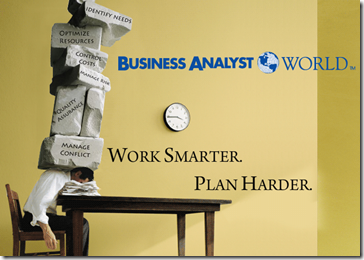
    The BA World conference is the only one of its kind in Australia and will cover all sorts of interesting topics such as requirements elicitation, change management, business process modelling, Agile, stakeholder management and BABOK. The theme for the event is “Work Smarter. Plan Harder” and will allow BA leaders to ensure that projects are clearly defined and flawlessly executed, enabling them to make the right decisions at every level in the organisation and increase project success.

    I am really looking forward to participating and it will be interesting to see what sort of feedback I get from a non SharePoint audience. As you may have gathered, this is not a SharePoint event and although I will still be talking about SharePoint as a collaborative platform to support working smarter, the main focus is on the power of IBIS and issue Mapping to help elicit real and tacit requirements and fast-track the path to shared understanding.

    Thanks for reading

    Paul Culmsee

    www.sevensigma.com.au


    BPC 09 August Wrap-up

    It’s been quite some time since I have blogged, and the months of July/August were really pretty full-on professionally. High work demands and preparation for the Best Practices Conference meant that blogging and any sort of public work really took a back-seat.

    So now that it is over and I am sitting here in an airport lounge reflecting, I have one word to say about the BPC 09 in DC that I just attended.

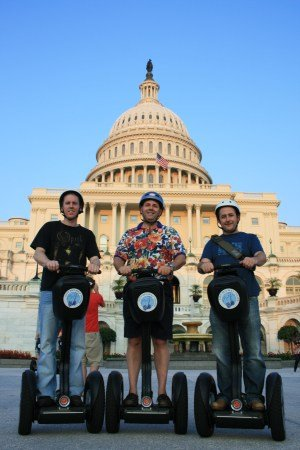
    Segways rock!

    image

    You have not lived until you have ridden a segway – and I mean the new ones where you lean to control it. Even better than riding a segway is to ride it through DC, a city that blew me away with its amazing campus-like vibe. Never before has a city really pushed my buttons like this place. As you can see above, Ruven Gotz, Andrew Woodward and I visited some of the amazing DC sights and this photo in particular of Capitol Hill behind us, looking out toward the Lincoln memorial is something I’ll never forget. One thing is for sure, I am definitely coming back here for at least 2-3 weeks with the family just to absorb everything – sooner rather than later.

    These best-practices events are really the conference where the material goes beyond the tech-stuff and caters additionally for an audience of consultants, business analysts, project managers and CIO’s. Some sessions are completely strategic, yet some delve deep into the guts of tech. In short, there is something for everyone.

    Since the San Diego event back in Feb 09, my fellow kindred spirits, Ruven Gotz, Andrew Woodward, Dux Sy and I have been collaborating to bring our respective messages together and put a cohesiveness around what we have to say. This conference was the first peek of the fruit of that collaborative effort and as far as audience feedback went, it went down really well. In my last session of the conference I had a little Jerry Springer moment, when describing a particular slide that was a part of all of our respective talks, when I asked the audience to describe the slide and they all answered in perfect unison – hehe the message was heard 🙂

    I presented 3 sessions, one on my own, and two co-presented with Ruven Gotz and Peter Serzo respectively. Ruven and I have been unhappy with the current (mis)understanding of governance around SharePoint and the culmination of our efforts over the last new months was a talk called “Governance – the other 90%”, although next time I will rename it to “Zen and the art of SharePoint Governance”. This was an umbrella talk to introduce our concepts and thinking, and then it was followed up later in the conference by talks by Ruven, myself and Andrew Woodward. Andrew took out the best overall speaker award too for the conference and we are all super-excited by the fruits of this collaboration so far, and I *know* that bigger and better things are to come from it.

    For what its worth, if you want to be “one with SharePoint governance”, remember the key takeaway – beer is the best governance tool you’ve got. 🙂

    The session with Peter Serzo was also such fun – we hit upon the idea of doing a Zoolander themed talk to introduce SQL Reporting Services to people who had not seen it. SSRS is one of those tools and technologies where even some well known SharePoint practitioners have not used it. With a title of “Reporting Services for the Really Really Good Looking”, we attracted a good turnout and managed to create and publish a report in 5 minutes, explain the architecture by getting members of the audience to stand up, wear aprons and “model” the various components and show how with no code, information workers could include drill down reports as well as personalised reports via parameters and filter web parts. The very awesome Brett Lonsdale (the guru behind BDC Meta Man), interrupted proceedings, claiming that the BDC was a better option and there was only one way to settle it – he and I had to do a BDC vs SSRS “walk off” which I *of course*, won easily :-).

    Brett was a great sport, and I think for a minute audience members actually thought he was serious 🙂

    (Now here comes the gushing love people..)

    Also this time around, I’ve gotten to know more people and the rare opportunity to hook up again and spend some quality time with various friends was really the thing that makes the 36hr transit from Perth worth it. From the BBQ at Dux Sy’s house, to some great dialogue with Ben Curry of Mindsharp, Judy Cowan of Microsoft, Evan Burfield and the Synteractive people and my SamePage amigo’s (Dux, Ruven and Andrew Woodward). Ben Curry is an out and out genius, and our CV’s seem to read from the same script and I wish I had more opportunity to work with him. Evan Burfield is so scary smart that he automatically become my hero with his amazing understanding of stuff that I am interested in, yet only scratching the surface of the surface 🙂

    Special callout to Laura Rogers (aka @wonderlaura). I had to look up what a muse was after she told me I was hers (I am a little sheltered over in Perth 🙂 ). Love her work – in fact, it is *her* work at endusersharepoint.com that inspired me to get back into more end-user content and try this whole screencasting thing. Laura, we are going to have to do something on EUSP together if you’d be up for it – it was a lot of fun hanging out and I think Peter Serzo would be up for something fun as well.

    To the people who sat around the bar/restaurant/lobby table and supplied great laughs and great conversation. Zlatan Dzinic is utterly brilliant but is genetically programmed to be unable to whisper in someone else’s session 🙂 ). Mike Ferarra from SharePointReviews.com, Dan Usher, Lori Gowin, Ben Curry for messing with my head constantly, Paul Kolasky (the self-confessed poster boy for wicked problems who Laura eventually discovered *is* harmless 🙂 ) and special mention to Paul Stork – who was labelled as “that nerd who always has to jump ahead” during the Zoolander session.

    Final thanks – Peter Serzo and his wife, Stacey. Peter is the most “Australian Amercian” who I have ever met. I think he must have been an Aussie in a former life. He is a tireless worker who’s imagination and inventiveness always sets off sparks of inspiration for me. I am going to try and find a way to get him over to Perth for a local training workshop or user group thing – they’d love his sense of humour.

    Sorry if I missed anybody, I apologise. Also, please send me any photos, as many were taken, but I really was quite unsure about who’s camera was clicking at the time 🙂

    Thanks for reading

    Paul Culmsee

    www.sevensigma.com.au


    Who wants to spend 3 days with me and the gang?

    A quick bit of background. My last 2 trips to the USA were particularly fruitful in meeting many like-minded SharePoint pros, all of which are well known and highly regarded. Some close friendships were made and what was really cool was that some people I met, despite having very different skills and experience (and physical locations!), seemed to connect on a level that gave us the desire and impetus to to work together very closely idealistically and commercially. More on that soon enough… 🙂

    So who are the members of this global group of SharePoint mystery men?

    • Andrew (Agile Boy) Woodward – Agile extraordinaire. So damn agile in fact that blink and you’d never know he was there. Able to demolish long SharePoint projects into bite sized chunks in a single bound
    • Ruven (Magneto) Gotz. Mind mapping maestro with the ability to bend information architecture to his will, and able to know what you want before you even have formed the question
    • Dux (Mr Myagi) Sy. A sensei project Manager who will teach you the wax-on/wax-off approach to successful SharePoint delivery. He might even get you to paint his fence if you are lucky

    and me (aka Dr Wicked) round it off – pushing the boundaries of pop-culture metaphors for cheap laughs and the odd bit of work on shared understanding, ROI and SharePoint governance.

    So why does any of this matter?

    image

    It just so happens that all four of us are soon to be in the same place at the same time. This is actually a frustratingly rare occasion, given that Andrew is in the UK, I am in Western Australia, Dux is in DC and Ruven is in Toronto. But in August, we will all be presenting at the SharePoint Best Practices Conference in DC. We are all tremendously honoured to be presenters at this event and this time around, we have been collaborating together to try and really deliver some great sessions that capture the essence of our common philosophical approaches.

    It takes me around 30 hours of transit to get to the east coast, and Andrew also has to travel a fair distance too. Therefore when these sorts of opportunities present themselves, we like to make the most of it – and we are *not* just talking beer! (ok well that’s not strictly true – beer is a significant motivation :-D)

    Accordingly, we are planning a special “SharePoint Governance Mentoring” workshop that will run over a period of 3 days (August 19-21, 2009), prior to the conference itself. It will be a unique, one-off event and numbers will be strictly limited. We think that our combined skills cover the broad spectrum of the SharePoint universe very well, with a particularly strong governance underpinning. Participants will be able to delve into topics such as how to manage a SharePoint project, practical techniques in gathering requirements, achieving shared understanding and buy-in, information architecture, team dynamics and the root causes of organisational chaos that make SharePoint an attractive proposition in the first place. We will also cover making a great business case and understanding return on investment, how to approach application development on the SharePoint platform and above all, learning what governance is really all about, and applying the right sort of governance at the right time. 

    Additionally, plenty of time will be allocated for participants to discuss their SharePoint challenges in an open forum, so if you bring your SharePoint baggage, we will lend a sympathetic ear and then arm you with some new kung-fu skills to take back to your organisation.

    Does this event sound like your cup of tea? If so, we need to hear from you! We will publish the workshop details and outline in mid-July but we need to gauge interest now. The cost for this three day event will be $1750 per attendee, although anyone who is registered for SharePoint Best Practices Conference will be entitled to a 10% discount.

    So if this sounds good to you, then please register your interest at Dux’s site below:

    http://sp.meetdux.com/workshop_interest.aspx

    Thanks for reading (and we hope to see you there!)

    Paul Culmsee

    www.sevensigma.com.au


    « Previous Page

    Today is: Wednesday 3 June 2026 -